
Editorial
A developer looking for an AI model usually wants to get past the search and into the work. Hugging Face made that ordinary. Its pages became the place to compare a model, inspect its documentation, download the files, and see what other people had built with it. This week Nvidia agreed to buy the company for $12.93 billion, putting one of the industry’s most useful meeting places inside the company that already supplies much of its computing power.
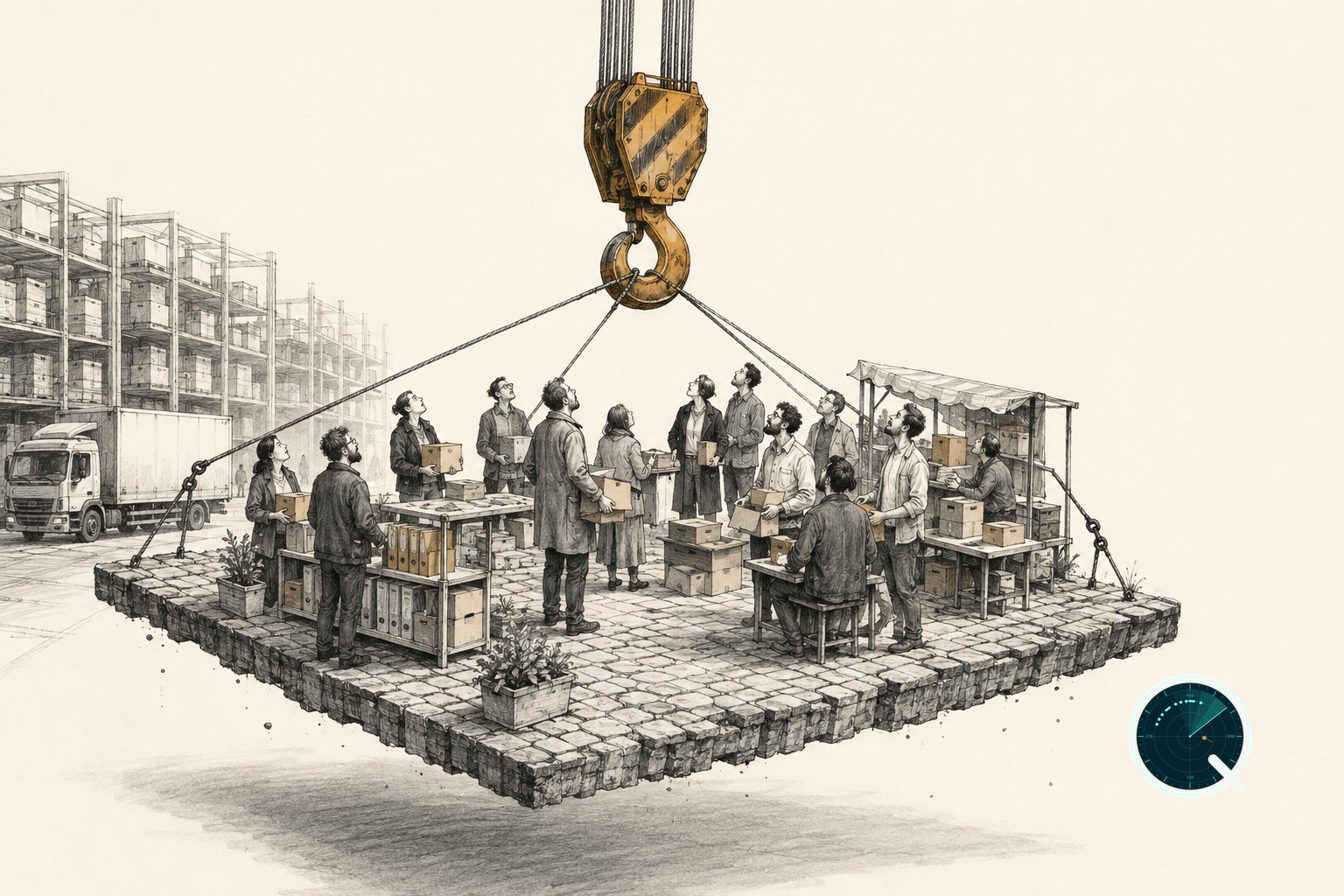
The scale explains the price. Hugging Face says more than 18 million developers use the platform, along with over 200,000 companies. It hosts more than three million models, roughly half a million datasets, and close to a million applications. Those collections matter because they save people from having to know where every model began or how every research group distributes its work. Over time, a convenient catalogue grew into shared infrastructure for the open-model community.
That position has become more valuable as the models themselves multiply. Several laboratories released frontier systems this week, while increasingly capable open models can run on a desktop. The expanding supply gives developers more choice, but it also makes discovery, comparison, and distribution harder. Hugging Face sits at that point of decision. Nvidia is paying for a relationship with the people choosing what to try and what to build into products, long before many of them purchase hardware or cloud capacity.
Nvidia’s ownership creates an obvious tension because Hugging Face earned its standing through broad compatibility. Developers can arrive with different frameworks, clouds, and accelerators and still use the same platform. Jensen Huang has said those choices will remain, including the freedom to use hardware made by Nvidia’s competitors. The promise is credible in one important respect: narrowing the platform would make it less useful, and a less useful platform would give developers a reason to gather somewhere else.
Commercial incentives may therefore protect much of what people value about Hugging Face. Nvidia sells more chips when more developers experiment with AI, whichever model begins the journey. New ownership also gives Hugging Face deeper resources for work that a perpetually fundraising company might struggle to fund. GitHub remains widely used under Microsoft, offering a relevant example of a broad developer platform retaining its usefulness after an acquisition. Hugging Face now has to establish that record for itself.
Ownership still changes the field of small decisions. Search rankings, featured projects, default configurations, hardware examples, and recommended deployment paths can all favour one ecosystem without any formal restriction. Each choice may have a reasonable product explanation. Taken together, they shape which tools feel easy and which require extra work. The important changes, if they come, will probably appear in these details rather than in a dramatic reversal of the platform’s public commitments.
The acquisition tests whether useful neutrality can survive a change in incentives. Nvidia now benefits from activity on the platform and from many of the computing choices made after a developer leaves it. Hugging Face’s community gains access to Nvidia’s resources while depending on the new owner to preserve the openness that attracted the community. Users will have to judge a long sequence of product choices rather than relying on the promise made when the deal was announced.
Those choices will surface in daily use: which models appear first, which deployment recipes receive the most care, how easily rival hardware works, and whether outside contributors still feel welcome. Hugging Face remains a meeting place for much of the open-model world. Search results, documentation, and defaults will show how much room that world retains inside Nvidia.
Zen
Ryokan and the moon at the window

Ryokan lived alone in a small hut at the foot of a mountain. One evening he returned from a walk and found a thief searching the room. The monk owned so little that the visitor could find nothing worth carrying away.
Seeing the man about to leave empty-handed, Ryokan took off his clothes and gave them to him. The thief accepted the strange gift and disappeared into the night. Ryokan sat naked in the doorway and looked at the moon.
The story, preserved for many English-language readers in Zen Flesh, Zen Bones, ends with Ryokan wishing he could have given the thief the moon as well. Its beauty lies partly in the impossibility of the gift. The moon was already there for both men, untouched by the contents of the hut or by either man’s claim to it.
Ryokan’s response was extreme, even reckless by ordinary standards. The story leaves that discomfort in place. The thief searched the hut for something he could own, while Ryokan’s attention settled on what filled the doorway after the room had been emptied.
The story ends there. Ryokan is cold, the thief has his clothes, and the moon remains visible to them both. It offers no account of what the thief did next and no instruction for the reader to copy the monk. The last image simply stays at the window.
Life and business cannot be conducted from Ryokan’s hut. Homes need locks, companies need accounts, and people are responsible for what has been entrusted to them. His moon points to a narrower truth about ownership: acquiring something does not secure the qualities that made it valuable. A company may buy a platform while its usefulness still depends on choices made freely by developers, customers, and contributors. In ordinary life, the same tension appears whenever care for a house, career, or institution begins to crowd out the people and purposes it was meant to serve.
The Week’s Best Articles
Passkeys face a new test in agentic commerce
— Frontier Enterprise via PaymentsNews.com | September 3, 2026
When an AI agent makes a purchase, authenticating the human is no longer enough. Merchants, banks, and networks also need to know what the agent was authorized to buy. That problem dominated a FIDO Authenticate panel in Singapore featuring Google, Mastercard, and PayPal.
Passkeys solved the question of who you are. Agentic commerce reopens a harder one: proving scope and intent when software transacts on your behalf. The industry is now trying to bolt authorization limits onto an identity layer that was designed to confirm a person is present, and the answers will shape who bears fraud liability when an agent overspends.
Stripe acquires OpenRouter for more than $7.5 billion
— Fintech Wrap Up | August 30, 2026
Stripe signed a definitive agreement to buy OpenRouter, the AI model gateway, for a total consideration above $7.5 billion in cash and stock, with a reported $1.5 billion retention pool for the team. It is Stripe’s clearest move to sit between businesses and the AI models they pay to use.
The structural logic is that inference is becoming a metered cost of doing business, much like card processing, and whoever routes and bills those model calls owns a lucrative choke point. OpenRouter aggregates hundreds of models behind one interface, which is exactly the kind of abstraction layer Stripe has monetized before in payments.
Stripe’s move also shows fintech expanding beyond the movement of dollars. Metering and billing machine work resembles a problem the company already understands, and OpenRouter gives it a place in the agent economy while the commercial infrastructure is still being built.
OpenAI’s GPT-6, code-named Astra, arrives
— This Week in AI / Latent.Space | September 3, 2026
OpenAI launched GPT-6, code-named Astra, and early testers called it the most capable frontier model yet. It reportedly saturated the hardest versions of FrontierMath at around 97.6 percent and posted near-perfect scores on ARC-AGI benchmarks, with the ARC Prize Foundation crediting OpenAI with the state of the art.
The louder claim is economic. One deep test framed Astra as an automated AI engineer you can effectively hire for under $6 an hour, after running more than 20 billion tokens through it across coding, browser control, and world-building tasks. That reframes the model less as a chatbot and more as cheap, tireless labor.
The open question is whether a single impressive release still moves the field the way it once did. Rivals shipped their own frontier systems the same week, and the advantage a new king holds now tends to be measured in months, not years.
Vanguard acquires Altruist for about $4 billion
— Fintech Blueprint | September 3, 2026
Vanguard is buying Altruist, the custodian that grew from a 2018 startup into the third-largest player by number of advisory firms served, for roughly $4 billion. The deal drops Vanguard into direct competition with Schwab and Fidelity for the registered-investment-adviser custody market.
Altruist built its base by undercutting incumbents on price and software for independent advisers, the same low-cost gospel that made Vanguard. Owning the custody layer gives Vanguard a distribution channel into the fast-growing independent advice segment rather than leaving those assets to sit on a rival’s platform.
For advisers it is a mixed signal. Consolidation usually means scale and stability, but it also thins the field of independent custodians that kept pricing honest in the first place.
ChatGPT, Claude, and Grok go dark at the same time
— The AI Agent Economy | September 3, 2026
Three of the largest AI platforms suffered service disruptions simultaneously, and the internet had a small nervous breakdown. Users posted half-joking, half-serious questions about how to complete basic work tasks, a reflex that revealed how quickly these tools moved from novelty to infrastructure.
The timing was suspicious enough to spark speculation, including a claim from Cardano’s Charles Hoskinson that a nation-state was behind it, though the evidence pointed toward more ordinary technical failures. The outage lasted hours, not days.
The reaction provided a rough measure of dependence. Knowledge workers scrambling to remember how they operated before agents became load-bearing showed how much cognitive weight now rests on a handful of external services.
Revolut launches its AIR assistant across Europe
— Linas’s Newsletter | September 2, 2026
Revolut rolled out its AIR AI assistant across European markets, folding a conversational money manager into the app. The launch is part of a broader race among neobanks to make AI the primary interface for everyday banking rather than a bolt-on feature.
Fintechs may hold an advantage through the transaction histories they already possess. A neobank that sees where and how customers spend can tune an assistant around behaviour that a general chatbot cannot observe, giving established financial apps a stronger starting point than their model technology alone would suggest.
Meta’s Muse Spark 1.3 vaults Meta Superintelligence into the frontier tier
— AINews / Meta | September 2, 2026
Meta released Muse Spark 1.3, and benchmarks put it level with GPT-5.6-class systems, a result being read as confirmation that Meta Superintelligence has clawed its way back into the group of genuine frontier labs. Meta framed the update around longer agent workflows and cleaner code at unchanged pricing.
For a company whose AI effort had been written off more than once, matching the leaders is a comeback story with strategic teeth. Available through Meta’s own API and coding tools, Muse Spark keeps a credible in-house model inside Meta’s stack rather than leaving it dependent on rivals.
OCC turns down charter applications from Bunq and Wise
— Fintech Business Weekly | September 2, 2026
The Office of the Comptroller of the Currency rejected charter applications from European fintechs Bunq and Wise, a reminder that a US banking license remains hard to win even in a friendlier regulatory season. The same recap noted the FDIC and trade groups floating fintech standards and Coastal’s earnings miss.
The rejections matter because a national charter is the difference between renting access to the banking system through partner banks and owning it. For fast-growing foreign fintechs, the OCC’s caution keeps them dependent on sponsor-bank arrangements that regulators have spent the past year scrutinizing.
Anthropic ships Claude Fable and Mythos 5.1 with a steep cache price cut
— The Deep View | September 2, 2026
Anthropic released Claude Fable and Mythos 5.1, pairing a new state-of-the-art model with a roughly 75 percent cut to cached-input pricing even as output allowances grew. The pricing move signals that the industry’s cost war has now reached Anthropic, long positioned at the premium end.
Cheaper inference matters more than a few benchmark points for the teams building on these models. When cost per token falls sharply, workloads that were uneconomical suddenly pencil out, and the competitive pressure that pushed Fable’s price down is the same force reshaping who can afford to run agents at scale.
Colorado sues EarnIn over its earned-wage advances
— Fintech Business Weekly | August 30, 2026
Colorado sued EarnIn, calling its earned-wage-access practices immoral, unethical, oppressive, and unscrupulous, and challenging the tips-and-fees model that lets the product sidestep lending rules. The case sharpens a long-running fight over whether paycheck advances are a convenience or credit by another name.
The outcome carries weight for the whole earned-wage-access category. If a state can recast optional tips and expedited-funding fees as the functional equivalent of interest, a business model that has raised hundreds of millions on the premise that it is not lending suddenly faces the rules it was built to avoid.
See you next week,
-dg